
Budget limits the trip

The single biggest lever on a family trip's cost is which category of destination you pick, not how frugally you travel once you're there. A week built around Florida's theme parks or a headline national park like Yellowstone or Zion carries peak-season lodging rates, timed tickets, and food costs that a park-adjacent gateway town sets deliberately high because demand supports it. Swapping the destination, not the itinerary style, is what actually moves the number.
The fix is a substitution rule rather than a shopping list: for whatever high-profile place you were considering, look for the version of it one tier down. If the pull is a theme park, a smaller regional park or a state fair-style attraction nearby delivers the same rides-and-shows format without the flagship pricing. If the pull is a national park, a state park within driving distance usually offers comparable trails, water, and campgrounds at a fraction of the entrance fee and with far shorter lines at the gate. A roundup of underrated, budget-oriented US destinations makes this substitution explicit, framing lesser-known spots as functionally interchangeable with the famous ones on activities while undercutting them on cost and crowding.
This rule travels well because it doesn't require abandoning what your family actually wants to do — hike, swim, ride roller coasters, see wildlife — it just asks you to find a lower-demand venue for that same activity. A canyon hike doesn't have to happen at the busiest overlook with the longest parking wait; a coaster doesn't have to be at the park with the two-hour standby line. Once you've picked the activity your kids care about, treat the specific destination as the variable to shop.
Children's ages set what the family can physically and attentionally handle
The age of your youngest traveler determines which of the three main destination categories will actually work, more than any ranking of "best" places does. Toddlers and early-elementary kids tolerate theme parks, resorts, and city attractions with short walking distances, frequent breaks, and predictable schedules; they generally do not tolerate long trail miles, unpredictable weather exposure, or a day with no nap window built in. Older elementary kids and teens, by contrast, can handle — and often prefer — hiking trails, rafting, climbing, and other adventure activities that would exhaust a younger sibling.
Matching destination type to age band up front avoids the most common failure mode of family trips: booking a destination for its scenery or reputation and discovering on day two that it doesn't fit the kids you actually brought. A guide to family-friendly US cities leans toward museums, aquariums, and walkable downtowns — a fit for younger children and for families without a car — while adventure-oriented itineraries built around hiking and rafting assume kids old enough to cover real distance on foot and sit still for a longer drive between stops.
A practical way to sort by age band:
- Toddlers and preschoolers (roughly under 6): resorts, theme parks with height-appropriate rides, aquariums, zoos, and cities with stroller-friendly downtowns.
- Elementary age (roughly 6–11): state parks and moderate national park trails, science museums, water parks, and shorter guided adventure activities.
- Teens: full-day hikes, multi-day national park itineraries, rafting or climbing, and cities dense enough to explore semi-independently.
The payoff of matching age to destination isn't a better vacation in the abstract — it's fewer mid-trip failures. A family that picks a destination suited to its youngest member spends less time improvising a backup plan when the original one turns out to be the wrong pace or the wrong physical demand.
A famous park or resort draws peak-season crowds
Crowding at a well-known destination doesn't just mean more people around you — it changes what's actually available to book. At the busiest national parks and resorts, crowding shows up concretely as sold-out lodging months out, timed-entry or reservation requirements that cap how many visitors enter per day, and queues at trailheads, restaurants, and rides that can eat hours out of a single day. A family that shows up without accounting for this can find that the thing they planned the whole trip around simply isn't accessible that day.
There are really only two responses that work, and they're opposites:
- Book far in advance for the exact dates you need, including lodging, park entry passes where required, and any dining or activity reservations, accepting the peak-season price as the cost of certainty.
- Shift to shoulder season — the weeks just before or after the peak crowd window — where lodging is more available, prices typically drop, and timed-entry systems (where they exist) are easier to book or unnecessary.
Either strategy converts an implicit risk into a planned decision. Several destination roundups gesture at popularity without addressing what that popularity does to bookability; a list of vacation spots aimed at trips to take before kids grow up names plenty of high-demand places without flagging that the same trip in July and the same trip in late September can be entirely different logistical experiences. Treat the calendar as a variable you control, not a fixed backdrop to the destination choice.
National park
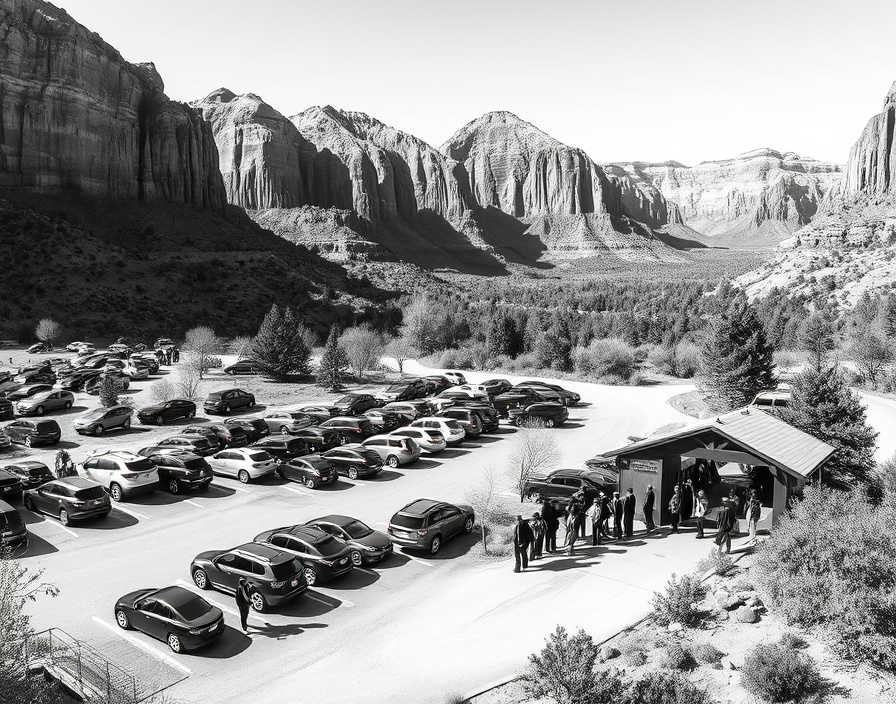
A national park is federally managed, which is the source of both its appeal and its cost structure. Entrance fees, timed-entry reservations, and shuttle requirements are not uniform across the park system — they're set unit by unit, so the pass and reservation rules that apply at one park may not apply at another, and a family should check the specific park's own current policy rather than assume last year's trip, or a different park's rules, will carry over. What is consistent is the underlying appeal: a predictable baseline of trails, visitor centers, ranger programs, and campgrounds regardless of which park you pick — which is part of why national parks are the most frequently recommended family destination type, and also the most crowded, since the same reputation that makes a park easy to recommend fills its parking lots by mid-morning in peak months.
The Grand Canyon is a useful example of why "which park" matters less than "which part of the park." Most family visits concentrate on the South Rim, which stays open year-round and is where the paved, largely flat Rim Trail runs along the canyon edge — a route a toddler or an early-elementary kid can manage in short stretches, with frequent overlooks to stop at rather than committing to a single long push. Descending below the rim is a different trip entirely: trails like Bright Angel drop steeply into the canyon on switchbacks with no flat recovery section, share the path with mule trains, and expose hikers to rising heat the further down they go, which is why they suit teens and adults rather than younger children, and why turning around partway rather than aiming for the canyon floor is the standard advice for a family day-hike. The North Rim, higher, cooler, and far less visited, works for older kids and adults who want quiet trail time but is a longer drive from most gateway towns and closes for the winter season, which is worth checking against your travel dates before building an itinerary around it.
For families at any national park, the practical planning question is less "which park" and more "which unit within it": many parks pair an easy, paved, stroller-accessible trail near the visitor center with much longer backcountry routes further in, and picking the right one for your kids' age band matters more than the park's overall reputation. Ranger-led programs, often free with entrance, are frequently the best-matched activity for elementary-age kids because they're paced and supervised by someone whose job is explaining the landscape to a mixed-age group.
State park
A state park is managed by the state rather than the federal government, and functions in most itineraries as the lower-cost, lower-crowd substitute for a national park covering similar terrain — the substitution described earlier under budget. Entrance fees are typically lower, day-use parking is rarely capped the way it is at the most visited national park units, and camping or cabin reservations are usually easier to get on short notice.
The trade-off is scale and staffing: a state park is less likely to have a full visitor center, ranger-led programming, or the same density of marked trail options as a major national park. For a family whose goal is simply outdoor time — swimming, a moderate hike, a picnic, a campfire — that trade-off is rarely a loss. It becomes a real one only if the specific draw is something a state park can't replicate, like a named geological feature or a particular wildlife-viewing opportunity that only exists in one federally protected place.
Theme park
A theme park is a ticketed attraction park built around rides, shows, and themed environments rather than natural landscape, and it's the destination category most often paired with Florida in family trip planning, alongside beach resorts. It's also the category where the age-band mismatch shows up fastest: a park built for thrill rides is a poor fit for a family with a toddler, and a park built around character meet-and-greets and gentle rides will bore a young teen well before the day is out, which is why matching the specific park (not just "theme park" as a category) to your kids' ages matters as much as it does for outdoor destinations.
Cost at theme parks concentrates in a few line items — multi-day tickets, on-site or nearby lodging during peak season, and food purchased inside the gate — all of which are easier to control by shifting dates than by cutting anything out of the day itself. The shoulder-season logic from the crowding section applies directly here: the same park in a lower-demand week typically has shorter lines and more room in nearby lodging, without changing what's on offer.
Florida
Florida is the most frequently named state in family travel planning for a straightforward reason: it combines the country's biggest cluster of theme parks with warm-weather beach resorts, letting a single trip cover both destination categories without a long additional flight. That combination is also what pushes Florida's family-trip costs upward — theme park tickets and peak-season resort rates compound rather than substitute for each other when a family tries to do both a park and a beach stay in one visit.
The budget substitution rule applies inside Florida just as it does across destination categories nationally: a lesser-known beach town or a regional attraction outside the main theme-park corridor can deliver similar sand-and-sun time at a lower nightly rate, freeing up more of the budget for the theme-park days that are harder to substitute away from if that's the specific draw. Families whose priority is the theme parks specifically should expect that priority to set the trip's price floor; families whose priority is simply "Florida, warm weather, beach" have considerably more room to shop for value.
US family vacation
A US family vacation is, at root, a multi-day trip planned around travelers of different ages and different physical limits — which is exactly why the destination-type decision (national park, state park, theme park, or city) matters more than the specific place-name decision. Two families choosing "Yellowstone" and "a state park two hours from home" aren't choosing different versions of the same trip; they're choosing different trip structures, with different daily paces, different booking lead times, and different cost ceilings.
The logistics that actually determine whether a trip works are rarely addressed directly in destination write-ups: how many days the trip runs, whether the family drives or flies, and how far apart the stops are if the itinerary covers more than one place. A single national park visited for four or five days with no other stops is a fundamentally different trip — in packing, pacing, and cost — than a driving loop through three states in a week, even if both are described as "national park vacations." A broader roundup of best US family vacation spots lists many individual destinations side by side without distinguishing which ones assume a fly-in single-base stay versus a road-trip structure; that distinction is worth settling before booking anything, since it changes how much of the budget goes to transportation versus lodging and tickets.
Settling three things before comparing specific destinations avoids most of the mismatch problems above:
- Trip length — a long weekend suits one destination and one lodging booking; a week or more can support either a single deep stay or a multi-stop loop.
- Driving vs. flying — driving keeps costs flexible and allows the state-park substitution described earlier; flying commits you to a narrower radius of destinations reachable without a second flight.
- Distance between stops — if the itinerary includes more than one destination, the drive time between them should be checked against your kids' age band, since a five-hour drive that a teenager tolerates easily can consume a toddler's entire day.
Pick the destination category and age-band fit first, settle trip length and transportation mode second, and only then start comparing named places against each other — the reverse order is how most itineraries end up mismatched to the family that has to live inside them for a week.